Kilter Board Map
The original 12x12 layout
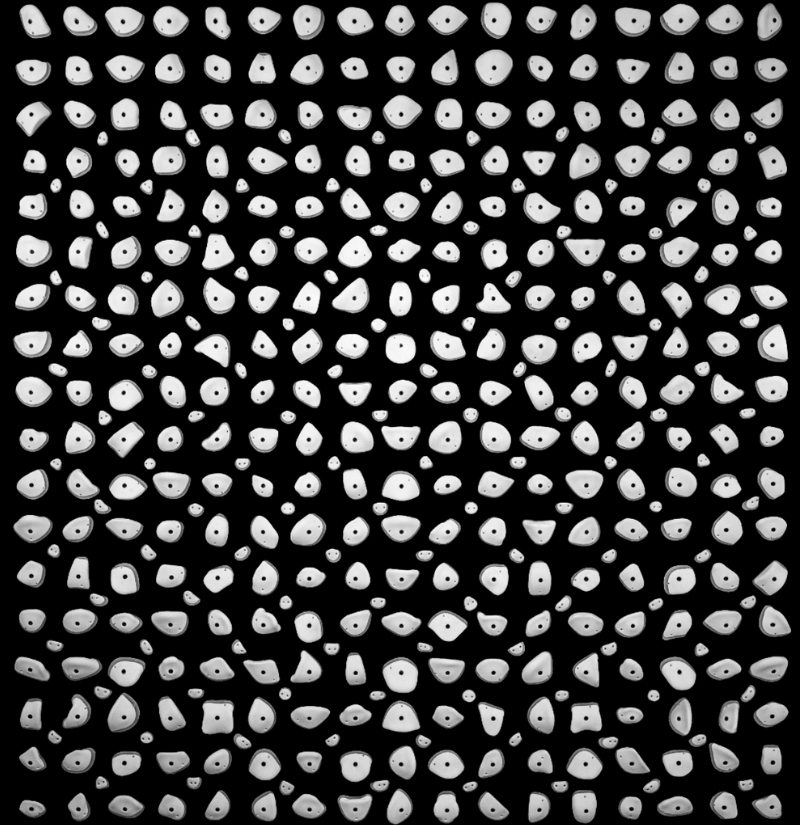
The original Kilter Board layout is known for its large hold size, numerous juggy holds, and soft grading (in general). It's the antithesis of the old Moonboards with their tiny pinches and crimps, almost no jugs, and brutally sandbagged grading.
The holds have an ergonomic design: most of them have gentle curves, comfortable to grip. Some of the crimps are a little sharper, but many have rounded and slopey edges. The texture of the holds is quite smooth: they're pretty easy to grip without being very abrasive.
The fact that the board has so many large, positive, juggy holds presents challenges for setting difficult problems, particularly at less steep angles like 40°. There is a tendency to set huge dynamic moves between juggy holds, which is a fun and flashy style, but these type of moves tend to be very height and span dependent. That being said, there are enough bad holds (especially when you include the foot chips as handholds) to set in a more classic resistance-and-tension climbing style. These latter are my favorite sets.
The least steep angles (most commonly 30° and 20°) have climbs in odd and niche styles at higher grades, often involving huge moves requiring a large span. Using the "Routes" feature on the Kilter Board works very well at these angles.
40° is probably the most commonly used angle as some Kilter Boards are fixed at this angle. Most of the holds including the slopers feel quite juggy at this angle, but it's certainly possible to set tension-style climbs on bad holds with smaller moves at 40°, and there are plenty of such sets.
50° is a contender for the best Kilter Board angle for hard climbs because the holds, particularly the pinches and slopers, get bad enough that they become more versatile for use in hard sets (say V8+). A great example is the L11 sloper: it's very positive and has a large edge that makes it juggy enough to catch with one hand while cutting feet at 40° (see "Deathtouch"), but at 50° the hold becomes significantly harder to use, much more dependent on friction and body position.
60° is also a contender for the best Kilter Board angle for the same reasons. It feels completely different climbing at this angle compared with 50°: the slopers become even more dependent on friction and body position, and keeping tension through the feet is noticeably harder. On deadpoints with feet cuts, the swing can be massive (can approach a 180° arc) and even mega jugs can be hard to hold. Tension-style climbs with smaller moves and high feet are very common at this angle.
70° feels fairly similar to 60°. It's fun to climb at 70° but this angle creates a logistical problem: limited space between the board and the mat. If your Kilter Board doesn't have a kickboard, the wall can be just a few feet from the mats which makes it hard to climb without touching the ground. Even with a kickboard, holds near the bottom of the wall tend to be very difficult to use as anything but footholds. Feet cuts will usually result in your feet hitting the mats (dabbing) unless done near the top of the wall, or with the legs tucked.